|
|
|
|

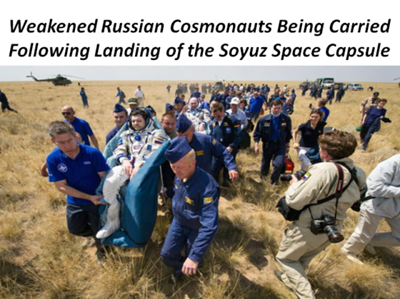
Humans May Keep NASA from Meeting the Little Green Men by Dr. Tom Barrett, November 3, 2017No one is certain whether little green men really live on Mars. But if they do, human frailty may keep us from ever meeting them. We have the technology to put men and women on Mars, but with NASA’s current health and spacesuit technology, they probably wouldn't survive the trip. Why?
Blood. Blood volume and circulation suffer. The heart itself shrinks in size. After all, it is mainly a muscle. "If you have less blood then your heart doesn't need to pump as hard. It's going to atrophy," says NASA’s Dr. Schneider. A NASA study also revealed blood vessel stiffening in space travelers – a key risk factor for cardiovascular disease. Space also affects the body’s ability to utilize oxygen and can impair the body’s ability to maintain proper blood pressure. Muscle. Muscle atrophy is a serious problem, particularly once the space explorer returns to earth. “The atrophy of muscles in space can affect not only the performance of astronauts during missions, but it can lead to severe muscle injuries upon return to Earth,” according to NASA literature. Atrophy is the process in which muscles weaken, deteriorate, and shrink. Studies have shown that up to 20% muscle loss can occur even in short spaceflights of five to eleven days. Long-term, NASA estimates that muscle size and function can deteriorate 20% to 40% without countermeasures. Bone. Astronauts in flight for weeks or months can experience serious bone issues. The calcium in their bones is lost through urination. As the bones get weaker they can break in even a minor fall - just as if they had osteoporosis. Computer models indicate that as much as 40 to 60% loss of bone mass could occur on extended missions. In addition to the three main health dangers of health flight, other possible risks exist. Some astronauts have returned to earth with “diabetes-like symptoms.” Fortunately, so far these have dissipated in a short time. Many have experienced vision problems caused by increased intraocular pressure, some of which could cause partial or full blindness. And rats studied in a 2016 flight of two weeks duration developed early signs of liver disease. So NASA has much work to do to protect the health of the pioneers who will eventually venture out on longer and longer missions. Study the way different risks affect each other - such as the impact food and nutrition have on physical and mental health and performance; Stress the differences between spacewalks outside the ISS versus work outside vehicles on planets, where environments could be totally different; Consider a broader array of spacesuit designs - the current reports discuss only one; Begin tailoring more research to individuals and account for the differences between individuals. NASA has tried various methods of treating the health problems of space travel, including osteoporosis drugs for bone loss and intense exercise to combat muscle atrophy. It has also been working on new spacesuits that may reduce the risk of injury or illness.Fortunately, they have learned about a technology that can replicate the earth’s magnetic field, and have partnered with the European company that pioneered the technology. Together they hope to engineer the next generation of spacesuits. The technology can increase blood flow and oxygenation of the body’s cells. When it is available, it should eliminate or mitigate many of the problems described in this article, and hasten the recovery time of the brave astronauts who risk their lives to advance scientific knowledge. INTERNET RESEARCH: CNBC: The Health Risks of Spending a Year in Outer Space Space Space.com: Weightlessness and its Effect on Astronauts NASA Fact Sheet on Muscle Atrophy in Space NASA Fact Sheet on Bone Atrophy in Space NASA: Cardiovascular Health Consequences of Long-Duration Space Flight What Are the Long-Term Effects of Living in Space? NASA is Studying Twins Mark & Scott Kelly to Find Out.  A Special Invitation to You 
|

 

|